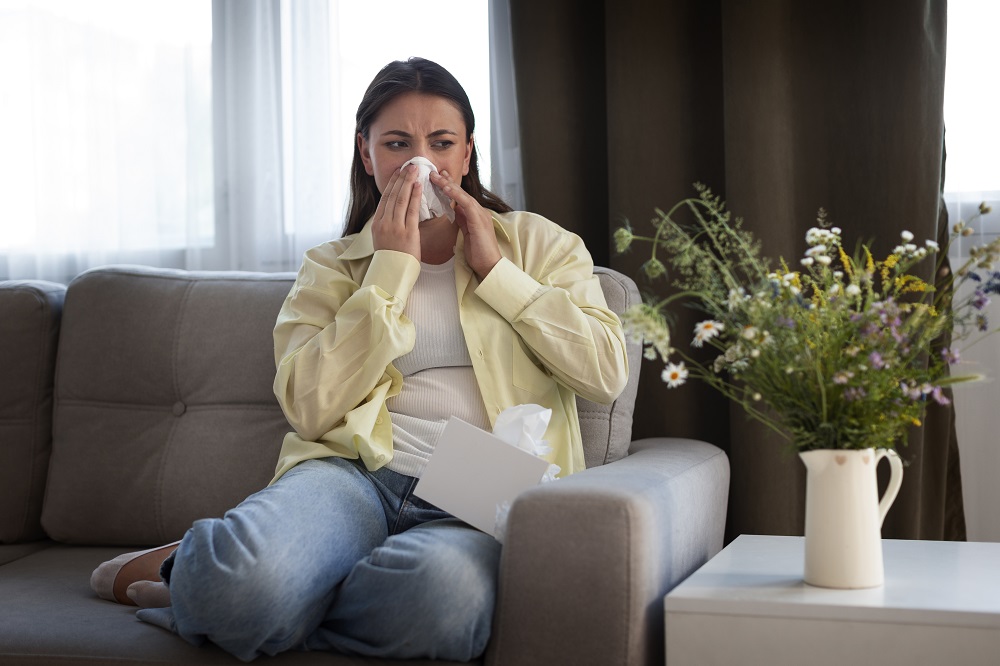
Indoor allergens are the quiet reason many people search for allergy testing nearby after months of unexplained congestion. Unlike pollen, they don’t follow a season. Dust mites, pet dander, and mold can trigger symptoms year-round, and they’re a well-known driver of asthma flare-ups.
American Lung Association data updated in 2025 shows that several Georgia children had current asthma in 2023, and indoor triggers are among the first things clinicians check. This guide explains how each major indoor allergen works, what symptoms to expect, and which steps cut exposure room by room.
The Short Answer: What Are Indoor Allergens?
Indoor allergens are particles inside your home that trigger allergy or asthma symptoms. The three most common are dust mites, pet dander, and mold spores.
Symptoms include sneezing, congestion, itchy eyes, and wheezing, and they often worsen at night or at home. Allergy testing confirms which allergen is responsible.
How to Tell Indoor Allergens from Seasonal Allergies
Seasonal allergies come and go with the pollen count. Indoor allergen symptoms tend to hang around. A few patterns point toward your home:
Symptoms continue through winter, when outdoor pollen is low
You feel worse in the bedroom, after vacuuming, or when handling old boxes
You improve after a few days away from home
Congestion is worst at night or first thing in the morning
The two can overlap. In 2026, the Georgia Department of Public Health said pollen season is starting earlier and lasting longer, and that pollen rides indoors on clothing, shoes, and pets. That’s why many patients have both outdoor and indoor problems, and why a thorough history matters before treatment.
Indoor Allergens and Asthma: Why the Connection Matters
For people with allergic asthma, indoor allergens do more than cause a stuffy nose. Inhaled particles inflame the airway lining, narrowing the airway and making it more reactive to other triggers, including cold air, exercise, and respiratory infections.
Over weeks of steady exposure, this low-grade inflammation can increase rescue inhaler use, disrupt sleep, and lead to missed school or work days.
Children, adults with a family history of allergy or asthma, and people living in older, damp, or crowded housing face the highest exposure. If you notice nighttime coughing, morning wheezing, or you refill your rescue inhaler more often than expected, indoor allergens deserve a closer look.
Dust Mite Allergy: The Hidden Bedroom Trigger
Dust mites are microscopic relatives of spiders. They don’t bite. People react to proteins in their droppings and body fragments, which settle into dust. Mites feed on shed human skin cells, so they gather wherever people sleep and sit: mattresses, pillows, upholstered chairs, rugs, and plush toys. They flourish when indoor humidity rises above 50%.
Symptoms of dust mite allergy include sneezing, a runny or blocked nose, itchy nose and throat, watery eyes, postnasal drip, and a dry cough. Symptoms often peak overnight or in the morning. Dust mites can also worsen eczema and trigger asthma, especially in children.
How to reduce exposure:
Cover mattresses and pillows with zippered, allergen-proof encasings
Wash sheets, pillowcases, and blankets weekly in hot water, ideally 130°F, and dry them completely
Replace or remove bedroom carpet where possible
Damp-dust surfaces and vacuum with a HEPA-filter vacuum
Limit stuffed toys in children’s bedrooms and wash them regularly; freezing kills mites but doesn’t remove the allergen
Keep humidity between 30% and 50%
Because dust mite allergy is so common, it’s often the first allergen found on a skin prick or blood test.
People often blame fur, but the real culprit is dander: tiny flakes of skin, plus proteins found in saliva, urine, and oil glands. These particles are lightweight and sticky. They float for hours, cling to upholstery and clothing, and travel to homes and classrooms that have never had a pet.
No dog or cat breed is truly allergen-free, so “hypoallergenic” labels shouldn’t be treated as a guarantee.
Cats are the most potent trigger for many people. A 2025 study in Asthma Allergy Immunology found that indoor cat exposure independently increased asthma risk and worsened asthma control in cat-allergic children, even compared with children who encountered cats only outdoors.
Symptoms of pet dander allergy include sneezing, runny nose, itchy or red eyes, skin hives where the animal licked or scratched, and, in people with asthma, wheezing or chest tightness. Reactions can appear within minutes or build over several hours.
How to reduce exposure:
Keep pets out of bedrooms, and shut the door
Run a HEPA air purifier in the rooms where you spend the most time
Choose hard flooring and washable throws over carpet and heavy upholstery
Wash pet bedding weekly and wash your hands after handling animals
Bathe pets regularly if your clinician agrees; it offers short-term relief at best
Ask about immunotherapy if pet exposure is unavoidable
Mold Allergy Symptoms and Where Mold Hides
Mold reproduces by releasing spores, and those spores are what trigger reactions. Indoors, mold grows wherever moisture lingers: bathrooms, basements, laundry rooms, under sinks, around window frames, and in air-conditioner drip pans.
Mold allergy symptoms include sneezing, runny or stuffy nose, itchy eyes, throat irritation, and a dry cough. In people with asthma, mold exposure can bring wheezing, chest tightness, and shortness of breath. A musty smell is often the first clue, even when you can’t see any growth.
How to reduce exposure:
Fix leaks promptly and dry wet materials within 24 to 48 hours
Run bathroom exhaust fans during showers and for about 20 minutes afterward
Use a dehumidifier in basements and damp rooms, and empty it regularly
Clean small mold patches, under about 10 square feet, with detergent and water
Clean humidifiers and dehumidifier tanks often, since dirty ones can spread spores
Never mix bleach with ammonia or other cleaners
Call a professional for large areas, HVAC contamination, or mold after flooding
Color doesn’t tell you how risky a mold is. If you see it, clean it up, and fix the moisture source so it doesn’t return.
When Allergy Testing for Indoor Allergens Makes Sense
Testing helps when guesswork stops working. Consider it if:
Symptoms last more than a few weeks, or return every year without a clear season
Asthma symptoms flare at home, around pets, or when cleaning
You’re deciding whether to adopt a pet, or whether to keep one
Your clinician is considering immunotherapy
Other Indoor Triggers Worth Knowing
Three more triggers often travel with the big three. Cockroach allergens from droppings and body parts are a well-documented cause of asthma, particularly in multi-unit housing.
Mouse and rat allergens work the same way. And while tobacco smoke, scented candles, and strong cleaning sprays aren’t allergens, they irritate the airways and can make allergic symptoms harder to control. Sealing food, fixing gaps, and keeping the home smoke-free reduce the load.
Reducing Indoor Allergen Exposure: A Room-by-Room Plan
You don’t have to tackle everything at once. Start with the bedroom, since you spend about a third of your life there, and work outward.
Hard flooring or low-pile rugs, weekly HEPA vacuuming, washable throws
Kitchen
Repair leaks, use the vent hood, seal food, take out trash daily
Bathroom
Exhaust fan after showers, wipe wet surfaces, wash shower curtains
Basement and laundry
Dehumidifier, no damp clothes left in the machine or basket
Whole home
Replace HVAC filters every one to three months, track humidity with a hygrometer, take shoes off at the door
Daily Habits That Keep Allergen Levels Down
Small routines add up faster than occasional deep cleans:
Open windows briefly on low-pollen days, not during peak counts
Wipe floors and hard surfaces with a damp cloth instead of dry dusting
Change into clean clothes after time outdoors, and keep outdoor shoes at the door
Make the bed with washed linens, and air out mattresses when you can
Check humidity weekly, especially after heavy rain or long showers
Wear a mask while cleaning if dust stirs up your symptoms
Choosing an Air Purifier That Works
Look for a true HEPA filter and a clean air delivery rate (CADR) matched to your room size. Place it where you spend the most time, usually the bedroom, and run it continuously. Skip ozone-generating “air cleaners,” which can irritate the lungs. A purifier supports, but doesn’t replace, source control like washing bedding and reducing moisture.
How Primary Care Identifies Indoor Allergens
Guessing which allergen is the problem wastes time and money. A structured evaluation starts with questions about your home: its age, flooring, pets, moisture problems, and when symptoms appear. Your clinician then examines your nose, eyes, skin, and lungs. If history suggests allergy, a skin prick test or blood test can pinpoint sensitivity to dust mites, cat or dog dander, and mold. If you also cough or wheeze, spirometry checks whether asthma is part of the picture.
At Windermere Medical Group, you get this evaluation in one place:
Testing on site. Lab testing and diagnostic imaging can be arranged in the office, such as a chest X-ray for a cough that won’t clear.
Serving 5+ locations. Get easy access to multiple locations near your home or office.
Seek urgent care for wheezing that doesn’t respond to a rescue inhaler, lips or fingernails that look blue, or severe difficulty breathing.
Same-day appointments for flare-ups that can’t wait
Weekend access: Saturday hours at several offices and Sunday video visits
Virtual clinic for follow-ups and medication reviews
Insurance accepted: Aetna, Cigna, Anthem Blue Cross Blue Shield, UnitedHealthcare, Medicare, and more, with financial assistance for eligible patients
Bring a short list of when and where your symptoms are worse. Call (678) 455-2800 or book online to schedule an evaluation at the office nearest you.
Final Thoughts
Indoor allergens won’t disappear, but you can shrink their impact. Start with the bedroom, control moisture, keep pets out of sleeping areas, and clean with the right tools. If symptoms persist, testing can tell you whether dust mite allergy, pet dander allergy, mold allergy, or something else is driving them, so you can focus on what matters.
Windermere Medical Group offers the testing, treatment, and follow-up to help you breathe easier at home. Schedule a visit at any North Georgia location to get started.
Dust mites, pet dander, and mold are the most common, followed by cockroach and rodent allergens. All can cause year-round sneezing, congestion, and wheezing.
Year-round sneezing, congestion, or itchy eyes that worsen in bed or after cleaning suggest it. A skin prick test or blood test can confirm the diagnosis.
No. Food allergies involve the immune system and can cause anaphylaxis. Food intolerances affect digestion, causing gas, bloating, or diarrhea without immune involvement.
You will receive a text from an “882-86″ short phone number inviting you to a video call, when your provider is ready for start your visit. (Please make sure our office has your correct and update phone number, because link will be sent to that phone number.)
Tap on the link in the text message, there is no need for you to download the app.
Tap on the blue ‘Join Visit’ button
In order to join your video call, you must grant your smartphone browser access to your camera and microphone.