
Disclaimer: This article is for educational purposes only and does not replace professional medical advice. If you or someone you love is experiencing a mental health emergency, call 988 (Crisis Lifeline) or 911 immediately.
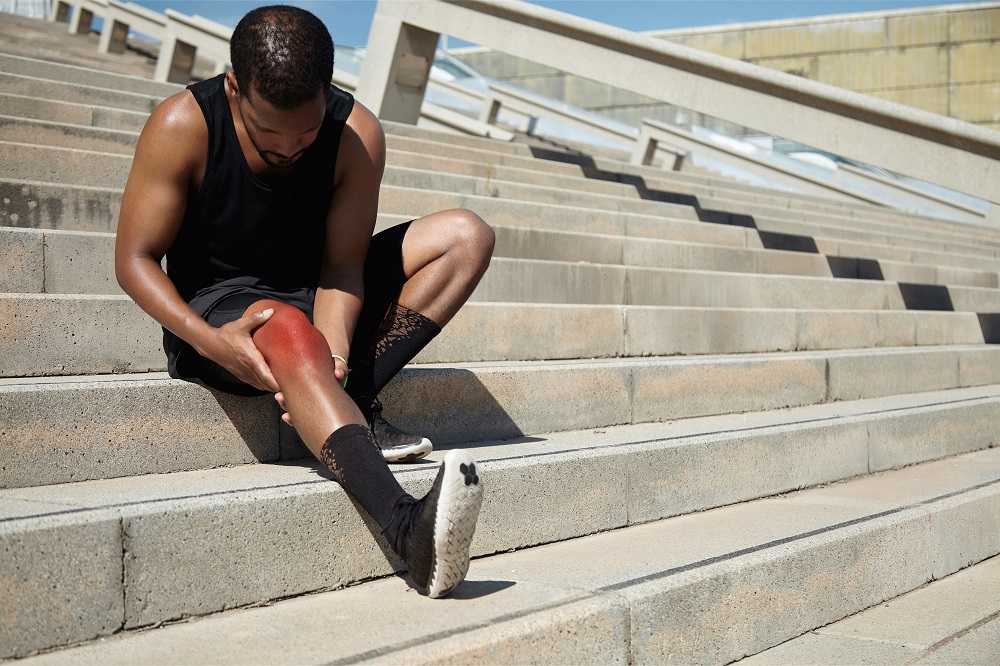
Most people assume that a serious sports injury means surgery. That’s understandable; surgery gets the attention. But the reality of common sports injuries treatment looks quite different. The vast majority of injuries that happen on a field, in a gym, on a trail, or during a weekend pickup game are treated without an operating room.
What they do require is a correct diagnosis, a structured treatment plan, and the discipline to follow through. This guide covers the most common sports injuries seen in clinics across the country, how each one is typically treated without surgery, and what the recovery process actually looks like.
Ankle sprains are the most common acute musculoskeletal injury in physically active people. In the United States, they account for an estimated 25,000 injuries per day. They happen when the ankle rolls inward (inversion sprain) or outward, stretching or partially tearing the lateral ligaments that stabilize the joint.
Grades:
Common sports injuries treatment for ankle sprains:
The RICE protocol, Rest, Ice, Compression, Elevation, is the immediate response. Applied within the first 24-48 hours, it controls swelling and limits secondary tissue damage.
From there:
Recovery timeline: 1-3 weeks for Grade 1. 3-6 weeks for Grade 2. Grade 3 sprains can take 3 months and may require more intensive rehab. Surgery is rarely needed, even for complete tears.
Hamstring strains are the most common muscle injury in running and field sports. They occur when the muscle is forcefully lengthened, typically during high-speed sprinting, with the hamstring working eccentrically (lengthening while contracting) at the end of the swing phase of a stride.
Grades (same framework as sprains): Mild fiber disruption to complete muscle tear. Grade 3 hamstring tears are relatively uncommon and usually managed conservatively unless the proximal tendon avulses completely from the ischial tuberosity.
Common sports injuries treatment for hamstring strains:
A mistake many athletes make is returning too soon after a hamstring strain, only to re-injure the same area. Re-injury rates are high, up to 30% in some studies, largely because patients return to activity before the tissue has regained adequate strength and flexibility.
Recovery timeline: 2-6 weeks for Grade 1 and 2 strains. Grade 3 may take 3-6 months.
Patellar tendinitis is an overuse injury of the tendon connecting the kneecap (patella) to the tibia. It’s common in sports involving repetitive jumping, basketball and volleyball, and in runners who increase mileage quickly. The hallmark symptom is pain directly below the kneecap, typically worsening with activity and improving with rest early in the course of the condition.
Common sports injuries treatment for patellar tendinitis:
Corticosteroid injections are generally avoided directly into the patellar tendon due to the risk of tendon weakening.
Recovery timeline: Acute cases respond in 4-8 weeks. Chronic tendinopathy can take 3-6 months of consistent rehabilitation.
Iliotibial (IT) band syndrome is a common overuse injury in runners and cyclists. It causes sharp pain on the outside of the knee, typically at the 2-3-mile mark of a run, forcing the runner to stop.
The IT band is a thick strip of connective tissue running from the hip down to the shin. It doesn’t stretch much. When it repeatedly rubs against the lateral femoral condyle, typically from weakness at the hip and excessive downhill running, it gets irritated and inflamed.
Common sports injuries treatment for IT band syndrome:
Recovery timeline: 4-8 weeks when the underlying hip weakness is addressed. Runners who only rest and then return without fixing the cause tend to relapse.
Shin splints are a catch-all term, but medial tibial stress syndrome (MTSS), pain along the inner border of the shinbone, is the most common version. It’s nearly universal among beginning runners and in-season athletes ramping up training.
Common sports injuries treatment for shin splints:
The most important thing to rule out is a tibial stress fracture. Both conditions cause shin pain, but a stress fracture requires more significant rest and sometimes a boot or crutches. An X-ray won’t always show it; MRI is the definitive test. If pain is focal, severe, or not improving with rest, imaging is warranted.
For residents of Cumming, Alpharetta, Canton, Gainesville, and surrounding communities, access to timely evaluation of common sports injuries doesn’t require a waitlist for a specialist. A primary care physician with musculoskeletal training can examine the injury, order imaging if needed, and initiate treatment for common sports injuries, often on the same day.
Windermere Medical Group offers minor injury care, diagnostic imaging, and physician-guided management of musculoskeletal complaints across six locations in North Georgia.
Same day appointments are available. The goal is straightforward: get the right diagnosis quickly, start the right treatment, and get you back to doing what you were doing before the injury.
No, but the majority can. Complete ligament tears, displaced fractures, and full-thickness tendon ruptures often need surgery. Most sprains, strains, tendinitis, and overuse injuries don’t.
It varies by injury. Mild sprains resolve in 1-3 weeks. Tendinopathies can take 3-6 months. Recovery depends on injury severity, adherence to rehab, and avoidance of reinjury during healing.
Not always. Mild sprains often recover with home care. But for anything moderate or involving the knee, shoulder, or ankle, structured PT significantly improves outcomes and prevents re-injury.
Ice in the first 48-72 hours for acute injuries (reduces swelling). Heat is more useful for chronic muscle stiffness or soreness that isn’t related to acute inflammation.
Returning to full activity too soon. Feeling less pain doesn’t mean the tissue is fully healed. Gradual, progressive return to sport, guided by strength testing and clinical assessment, prevents re-injury.
Dr. Priya Bayyapureddy, MD is a board certified Internal Medicine doctor with over 20 years of experience in primary care Internal Medicine. Dr. Bayyapureddy completed her Internal Medicine residency at Emory University School of Medicine and internship at University of Tennessee College of Medicine at Chattanooga.
Recent Post