Windermere Medical Group

Sports Medicine & Musculoskeletal Care in Cumming, Alpharetta & North Georgia: The Complete Guide

Sports Medicine
| Created by: Katie Fulco, FNP | Medically reviewed by: Priya Bayyapureddy, MD
Sports Medicine

Disclaimer: This article is for educational purposes only and does not replace professional medical advice. If you or someone you love is experiencing a mental health emergency, call 988 (Crisis Lifeline) or 911 immediately.

Sports injuries can happen to anyone, not just professional athletes. A sudden ankle sprain, lingering shoulder pain, runner’s knee, tennis elbow, or a strained muscle can interfere with exercise, work, and everyday activities. When an injury occurs, many people assume they need to see a specialist right away, but a primary care doctor is often the best place to start.

Sports medicine focuses on preventing, diagnosing, treating, and rehabilitating injuries that affect the muscles, bones, joints, tendons, and ligaments. Primary care providers play an important role in sports medicine by evaluating injuries, identifying their underlying cause, and recommending appropriate treatment.

This piece explains what sports medicine actually is, who practices it, what it covers, and why primary care is often the best first stop when something goes wrong with a muscle, joint, or tendon.

Understanding Sports Medicine

The name conjures images of sideline physicians at NFL games or team doctors for professional athletes. That exists, but it’s a small slice of what sports medicine actually covers.

Sports medicine is a field of medicine focused on physical activity, musculoskeletal health, and the prevention and treatment of movement-related injuries. That definition includes professional athletes, yes. But it also includes:

  • A 45-year-old runner with recurring plantar fasciitis
  • A high school soccer player with a sprained MCL
  • A 60-year-old dealing with chronic shoulder pain from years of manual work
  • Someone trying to stay active after a knee arthritis diagnosis
  • A student athlete in Cumming needs a pre-participation physical before fall sports

A key goal of sports medicine is not simply to relieve symptoms but to identify the root cause of pain or dysfunction, restore proper movement, and reduce the likelihood of future injuries. Through a combination of medical evaluation, treatment planning, rehabilitation strategies, and ongoing guidance, sports medicine helps patients stay active and maintain their quality of life.

Who Practices Sports Medicine?

Sports Medicine Physicians are physicians (MDs or DOs) who completed a residency in primary care, typically family medicine, internal medicine, or pediatrics, and then pursued a one-year fellowship in sports medicine. That additional training covers musculoskeletal diagnosis, imaging interpretation, joint injections, concussion management, and return-to-sport planning.

They are primary care physicians at their core. That means they can manage the whole patient, not just the injury.

Orthopedic Surgeons are surgeons first. Their training is centered on operative management of musculoskeletal conditions. Many also offer non-surgical treatment, and some complete sports medicine fellowships themselves. But their expertise and default approach is surgical.

Primary Care Physicians with Musculoskeletal Training, many family medicine and internal medicine doctors develop strong competency in treating common orthopedic complaints. They may not hold a fellowship in sports medicine, but they handle sprains, strains, overuse injuries, and joint pain regularly, and know exactly when to refer.

Physical Therapists are not physicians, but are essential partners in sports medicine care. They implement rehabilitation programs, address movement deficits, and guide patients through recovery.

If you’re searching for sports medicine near you, Windermere Medical Group will help you connect with primary care physicians, who are already equipped to help and easier to access than a specialist.

What Conditions Does Sports Medicine Cover?

A sports medicine physician (or a primary care doctor with musculoskeletal expertise) can diagnose and treat a broad range of conditions. These include:

Acute traumatic injuries:

  • Ankle and knee sprains
  • Muscle strains (hamstring, groin, calf, quadriceps)
  • Shoulder dislocations and separations
  • Contusions and soft tissue injuries
  • Stress fractures
  • Concussions

Overuse and chronic conditions:

  • Tendinitis (Achilles, patellar, rotator cuff, biceps)
  • Bursitis (shoulder, hip, knee)
  • IT band syndrome
  • Shin splints (medial tibial stress syndrome)
  • Plantar fasciitis
  • Tennis and golfer’s elbow

Joint conditions:

  • Osteoarthritis of the knee, hip, and shoulder
  • Meniscus irritation and degenerative tears
  • Cartilage problems
  • Ligament instability (partial tears managed non-surgically)

Sports-specific concerns:

  • Concussion evaluation and return-to-play protocols
  • Pre-participation physical exams
  • Nutrition and performance guidance
  • Injury prevention program development

This is a long list. Most of it doesn’t require surgery. Most of it can be managed, at least initially, in a primary care setting.

How a Primary Care Doctor Actually Evaluates a Sports Injury?

Here’s what a proper musculoskeletal evaluation actually looks like.

History and Mechanism of Injury

The first thing any good clinician does is listen. How did it happen? Was it a sudden event or did it come on gradually? Where exactly is the pain? Does it hurt at rest or only with activity? Has this happened before? Any prior surgeries or significant injuries?

The mechanism of how the injury occurred tells a lot. An inward knee collapse during a cutting move in basketball suggests an Anterior Cruciate Ligament (ACL) injury. Pain below the kneecap in a volleyball player who’s been training heavily suggests patellar tendinitis. A sharp pop during a lunge is different from a gradual ache that builds over six weeks.

Physical Examination

This is where clinical skill matters most. A sports medicine-trained physician performs:

  • Inspection: Swelling, bruising, deformity, muscle atrophy
  • Palpation: Locating the point of maximum tenderness
  • Range of motion: Active (patient-driven) and passive (examiner-driven)
  • Strength testing: Comparing sides, looking for asymmetry
  • Provocative tests: Specific maneuvers designed to stress a particular structure. The Lachman test for ACL integrity. The McMurray test for meniscus tears. The Empty Can test for the rotator cuff. The Thompson squeeze test for Achilles rupture.

Diagnostic Imaging

When imaging is needed, a primary care physician can order it.

  • X-rays
  • MRI
  • Diagnostic ultrasound

In areas like Cumming and Alpharetta, access to same-day or next-day imaging through a primary care practice significantly speeds up the path from injury to diagnosis.

Primary Care Sports Medicine vs Orthopedic Surgery

For many sports injuries and musculoskeletal conditions, a primary care sports medicine provider is the best place to start. They can diagnose the problem, initiate treatment, monitor your progress, and help determine whether specialized orthopedic care is needed, ensuring you receive the right level of treatment at the right time.  
Feature Primary Care Sports Medicine Orthopedic Surgery
Primary Focus Non-surgical diagnosis, treatment, and prevention of musculoskeletal injuries and conditions Surgical and advanced procedural treatment of musculoskeletal injuries and disorders
Common Conditions Treated Sprains, strains, tendonitis, overuse injuries, joint pain, sports injuries, back pain, and minor fractures Severe fractures, torn ligaments, joint instability, advanced arthritis, and injuries requiring surgical repair
Treatment Approach Conservative treatments such as medications, activity modification, rehabilitation, physical therapy, and injections Surgical procedures, reconstructive techniques, and post-surgical management
Diagnostic Services Physical examinations, injury assessments, imaging orders, and treatment planning Advanced evaluation for conditions that may require surgery
Focus on Prevention Strong emphasis on injury prevention, performance optimization, and reducing recurrence Primarily focused on correcting structural problems and restoring function when surgery is needed
Recovery Support Ongoing monitoring, rehabilitation guidance, and return-to-activity planning Surgical recovery management and coordination of post-operative rehabilitation
When to See Them First evaluation for most sports injuries, joint pain, and musculoskeletal concerns When conservative treatment fails, or surgery is recommended
Referral Role Can refer patients to orthopedic specialists if advanced care is necessary Often receives referrals from primary care or sports medicine providers

Non-Surgical Treatment: What Primary Care Can Offer

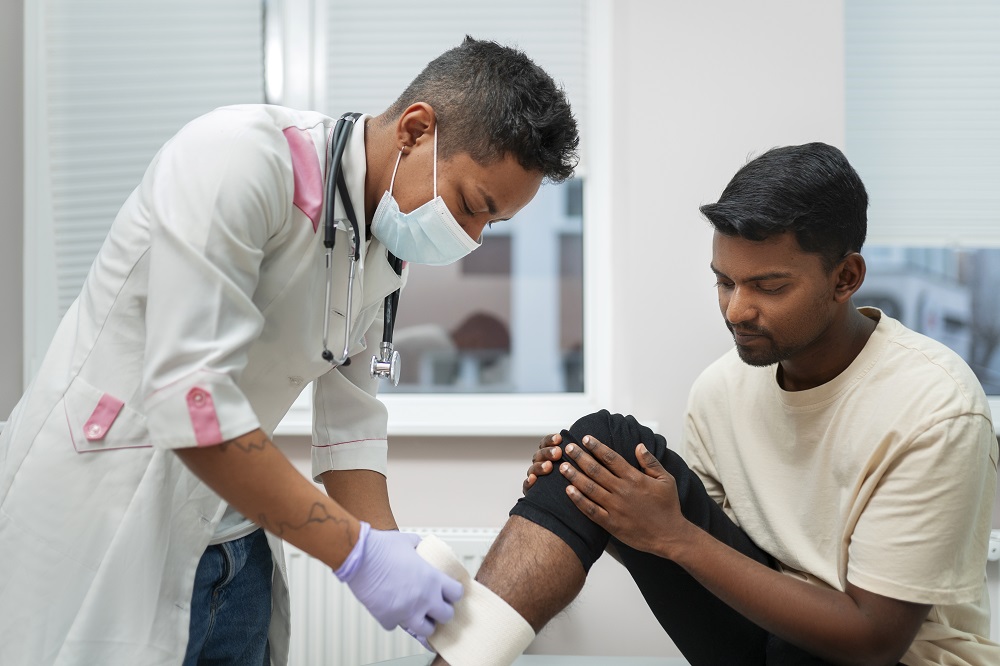
Here is where primary care sports medicine delivers real value. The majority of sports injuries don’t end in an operating room; they end in a structured non-surgical treatment plan. A primary care physician can implement most of that plan directly.

Rest and Activity Modification

Not all injuries need complete rest. “Relative rest”, reducing load while keeping some movement going, is often better. A physician can advise on how much activity is appropriate, which movements to avoid, and what a safe return to activity looks like.

Medication Management

Non-steroidal anti-inflammatory drugs (NSAIDs) like ibuprofen or naproxen are commonly used to reduce pain and swelling in acute injuries. Topical NSAIDs (diclofenac gel) can be effective for localized joint or tendon pain with fewer systemic side effects.

Muscle relaxants may play a short-term role in muscle strain or spasm. A physician manages dosing, duration, and any interactions with other medications the patient takes.

Physical Therapy Referral and Coordination

A primary care sports medicine physician doesn’t just refer to PT and walk away. They communicate the diagnosis, goals, and any precautions to the therapist and follow up on progress. This coordination matters. PT without a clear diagnosis or appropriate goal-setting can be ineffective or even counterproductive.

Joint Injections

Corticosteroid (cortisone) injections reduce inflammation in joints and around tendons. They can provide significant short-term relief and allow rehabilitation to progress. Primary care physicians trained in injections can administer these in the office, into the knee, shoulder, elbow, ankle, and other sites.

Platelet-rich plasma (PRP) injections, drawing the patient’s own blood, concentrating the growth factors, and injecting them into the injured tissue, are also administered by some primary care sports medicine physicians. PRP is particularly useful for chronic tendon problems and early joint degeneration.

Concussion Management

A sports medicine-trained primary care physician is fully equipped to manage concussions, from initial evaluation and cognitive rest recommendations to graduated return-to-learn and return-to-play protocols. This is a significant part of sports medicine in communities with active youth sports programs.

When Primary Care Refers to Orthopedics

Good primary care means knowing what you can handle and when to hand it off. A sports medicine-trained physician will refer to orthopedic surgery when:
  • Imaging shows a complete ligament tear (ACL, PCL, Achilles) requiring reconstruction
  • There’s a displaced fracture or one involving a joint surface
  • A rotator cuff tear is full-thickness and not improving with conservative care
  • A meniscus tear is causing mechanical symptoms (locking, giving way) that rehab doesn’t resolve
  • Conservative treatment has been thorough, and the patient isn’t improving; surgical options may change outcomes
The referral is targeted and informed. The orthopedic surgeon receives a patient who’s been properly diagnosed, has had imaging, and, in many cases, has already completed a course of conservative treatment. That efficiency benefits everyone.

Sports Medicine Near You in North Georgia

Timing matters in musculoskeletal care. An ankle sprain that’s properly evaluated within 24 hours and started on the right protocol immediately recovers faster than one that’s ignored for two weeks and then seen.

For athletes and active adults in Cumming, Canton, Alpharetta, Gainesville, and surrounding North Georgia communities, access to timely sports medicine-level care matters. Long waits for orthopedic specialists, often 3-6 weeks for a new patient appointment, can delay diagnosis and treatment at exactly the wrong time.

That’s where a primary care practice with musculoskeletal expertise fills a real gap. Same-day appointments, in-office imaging, and direct coordination with physical therapy mean patients get on the right path faster.

Sports Physicals in North Georgia

Pre-participation physicals are a practical sports medicine service that families across Forsyth, Cherokee, and Hall counties rely on each year. With fall sports seasons starting as early as July for conditioning camps, getting a sports physical done in late spring or early summer, before the rush, is something a primary care practice handles efficiently.

Final Thoughts

Sports medicine near you doesn’t have to mean a specialist with a six-week waitlist. It can mean your primary care doctor, someone who knows your full health history, can see you the same day, order imaging, prescribe appropriate treatment, and coordinate the rest of your care.

For most musculoskeletal complaints, that’s the right first stop. The injuries that eventually need surgery will get there. But most won’t, and starting with primary care means you get faster answers, a treatment plan that starts now, and a physician who stays involved through the full recovery.

At Windermere Medical Group, primary care physicians across Cumming, Alpharetta, Canton, Gainesville, Baldwin, and Lawrenceville provide musculoskeletal evaluations, care for minor injuries, and referral coordination for patients of all activity levels. Same-day appointments are available.

FAQs:

Most sports injuries, sprains, strains, tendinitis, and overuse conditions can be diagnosed and treated by a primary care physician without a specialist referral.

Your doctor decides based on the exam. Red flags include significant swelling, inability to bear weight, joint instability, or failure to improve with initial treatment.

It’s a one-year training program after residency that teaches primary care physicians advanced musculoskeletal diagnosis, joint injections, concussion management, and sports-specific care.

No. It treats anyone with musculoskeletal pain or injury, regardless of age, fitness level, or whether they play organized sports.

Call your primary care practice first. Our team at WMG offers same-day appointments for injuries and can provide most of the care you need without a waitlist for specialists.

About the Author

priya-bayyapureddy-md

Priya Bayyapureddy

Dr. Priya Bayyapureddy, MD is a board certified Internal Medicine doctor with over 20 years of experience in primary care Internal Medicine. Dr. Bayyapureddy completed her Internal Medicine residency at Emory University School of Medicine and internship at University of Tennessee College of Medicine at Chattanooga.