Windermere Medical Group

Mental Health & Psychiatric Care: A Complete Patient Guide, Finding Support

Mental Health
| Created by: Syed Nayer, PMHNP-BC, FNP-C | Medically reviewed by: Priya Bayyapureddy, MD
Mental Health & Psychiatric Care: A Complete Patient Guide, Finding Support​

Disclaimer: This article is for educational purposes only and does not replace professional medical advice. If you or someone else is experiencing a mental health emergency, call 988 (Crisis Lifeline) or 911 immediately.

If you’re exploring this page, you might be experiencing changes in your mood or behaviour that you want to validate. Perhaps you’re stuck in endless thinking loops, unexplained sweating or breathing issues, or loss of appetite. Whatever brought you here, know this: asking for help is the first step toward feeling better. More than 1 in 5 U.S. adults lives with a mental illness. Mental health and psychiatric care help people understand emotional, behavioral, and thought-related challenges and create a personalized plan to support daily life. At Windermere Medical Group, psychiatric care includes mental health evaluations, diagnosis when appropriate, medication management, follow-up visits, and coordination with therapy or other support services. Read on to know more. Explore Mental Health & Psychiatric care for all ages at Winderemere medical group

Quick Overview

According to the research performed by the National Alliance on Mental Illness (NAMI), 23.4% of U.S. adults (over 61.5 million people) experienced mental illness, yet only 52.1% of adults with mental health issues received treatment. This treatment gap represents millions of people suffering in silence, uncertain whether their symptoms warrant professional help.

Psychiatric care is a medical specialty grounded in evidence-based science, clinical evaluation, and individualized treatment planning. It addresses both acute mental health concerns and chronic psychiatric conditions.

Mental Health Crisis
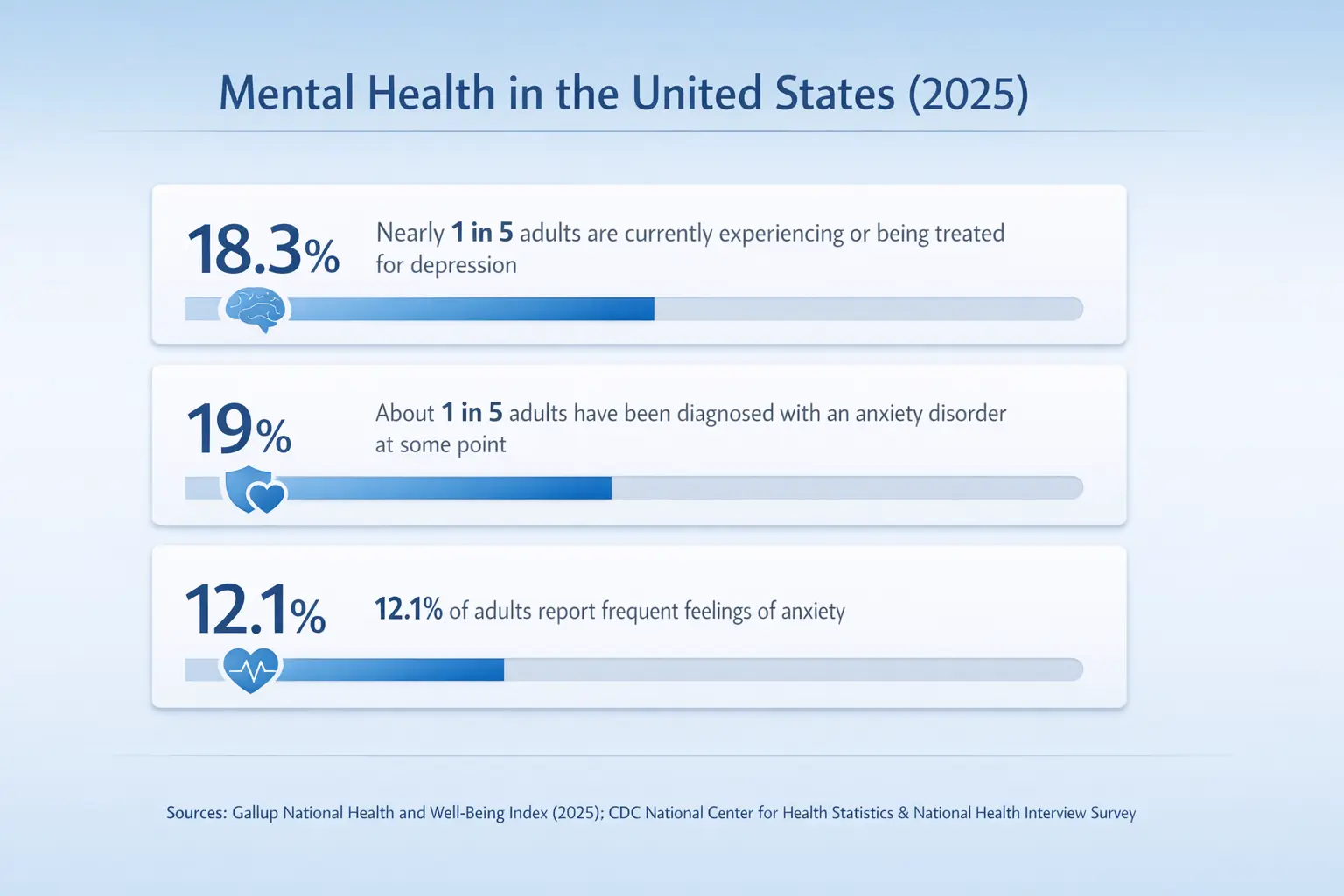
Mental health in United States in 2025

Why Mental Health Matters More Than Many People Realize

Mental health affects nearly every part of daily life. It influences how we think, feel, behave, sleep, work, learn, and connect with others.

Mental health conditions are far more common than many people realize. In Georgia and across the U.S., individuals seek mental health care not because they are weak, but because they want support, understanding, and tools to manage daily life more effectively.

Ignoring symptoms or delaying care can allow challenges to grow. Early support often leads to better long-term outcomes and improved quality of life.

What Is Mental Health?

Mental health encompasses our emotional, psychological, and social well-being. It affects how we think, feel, and act. Good mental health doesn’t mean you’re always happy; it means you have the resilience to cope with life’s challenges, maintain relationships, and function in daily activities.

When Does It Become a Mental Health Condition?

A mental health condition exists when symptoms:

  • Persist for weeks or months (not just a few bad days)
  • Interfere with your ability to work or care for yourself
  • Causes significant distress that feels unmanageable
  • Change from your usual personality

Important: You don’t need to reach a crisis point to seek help. Early intervention often leads to better outcomes.

What Is Psychiatric Care?

Psychiatric care is a medical specialty focused on treating mental health conditions that affect mood, thinking, focus, and behavior. According to the American Psychiatric Association, psychiatric care may include evaluation, diagnosis, medication management, and ongoing follow-up.

Psychiatric providers are medical professionals trained to understand how mental health interacts with physical health, medications, and life stressors.

According to the American Psychiatric Association, psychiatric care may include evaluation, diagnosis, medication management, and ongoing follow-up.

Psychiatrist vs Therapist vs Primary Care Provider

While many mental health professionals can provide valuable care, psychiatrists are medical doctors (MDs or DOs) with specialized training in diagnosing and treating mental health conditions.
Many people feel unsure about which type of provider they should see first. The table below explains the difference in clear, simple terms.

Mental Health Provider Comparison

Provider TypePrimary RoleHow They Help
PsychiatristMedical doctor specializing in mental healthDiagnosis, medication management, follow-ups
Therapist / CounselorMental health professionalTalk therapy, coping skills, and emotional support
Primary Care ProviderGeneral medical careInitial screening, referrals, basic support

Many patients benefit from collaborative care, where psychiatric and therapy services work together.

Who Should Consider Psychiatric Care?

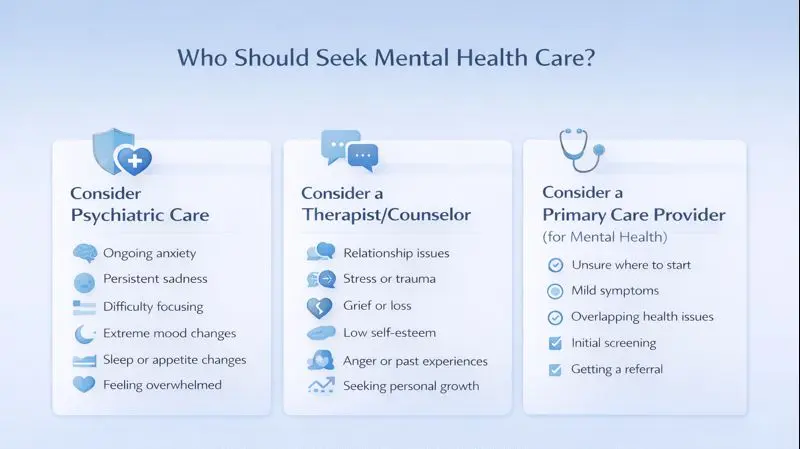
Who should consider Psychiatric care

You do not need to be in crisis to benefit from psychiatric care. Many people seek help because something feels “off,” even if they can’t fully explain it.

Psychiatric care may help if you experience:

  • Ongoing anxiety or excessive worry
  • Persistent sadness, low mood, or irritability
  • Difficulty focusing, organizing, or completing tasks
  • Extreme mood changes
  • Sleep problems or appetite changes
  • Intrusive or unwanted thoughts
  • Behavioral challenges at home, school, or work
  • Feeling emotionally overwhelmed or burned out

If symptoms last two weeks or longer, worsen over time, or interfere with daily responsibilities, professional evaluation can help.

Who Should Consider a Therapist/Counselor?

Therapy is not just for mental illness; it’s a space to process emotions, gain clarity, and build healthier patterns. Consider therapy if you are dealing with:

  • Relationship difficulties or communication struggles
  • Stress from work, school, or major life changes
  • Grief, loss, or trauma
  • Low self-esteem
  • Anger management
  • Emotional regulation challenges
  • Past experiences affecting your present life
  • A desire for personal growth or better coping skills

Who Should Consider a Primary Care Provider? (for Mental Health)

Your primary care provider is often the first step in addressing mental health concerns. Especially for individuals experiencing unexplained or mild symptoms.

See your primary care provider if you:

  • Are unsure where to start with mental health support
  • Have mild to moderate symptoms of anxiety or depression
  • Notice mental health symptoms alongside physical health issues
  • Need initial screening or assessment
  • Want guidance on next steps or referrals to specialists
  • Face long wait times for psychiatric or therapy appointments

Mental Health Conditions Commonly Addressed in Psychiatric Care

At Windermere Medical Group, psychiatric care provider supports conditions that affect emotional stability, learning, behavior, and daily functioning.

Anxiety and Depression

Anxiety and depression are among the most common mental health conditions in the United States. They can affect emotional well-being, physical health, sleep, energy levels, and concentration.

The Centers for Disease Control and Prevention (CDC) identifies anxiety and depressive disorders as two of the most frequently diagnosed mental health conditions among U.S. adults.

Common symptoms include:

  • Constant worry or fear
  • Persistent sadness or emptiness
  • Panic attacks
  • Fatigue or low energy
  • Difficulty sleeping
  • Trouble concentrating

Anxiety and Depression Treatment options include therapy, medication, or a combination approach tailored to your symptoms and preferences.

ADD / ADHD (Children, Teens, and Adults)

Attention-Deficit/Hyperactivity Disorder (ADHD) affects attention, impulse control, organization, and emotional regulation. While often diagnosed in childhood, ADHD commonly continues into adulthood.

According to NIMH, ADHD can affect academic performance, work responsibilities, and relationships if left untreated.

Possible signs include:

  • Difficulty staying focused
  • Forgetfulness or disorganization
  • Restlessness
  • Trouble finishing tasks
  • Emotional frustration

Treatment for ADHD/ADD may include medication management, behavioral strategies, and skill training.

Bipolar Disorder

Bipolar disorder involves changes in mood, energy, and activity levels that go beyond typical ups and downs.

The National Institute of Mental Health explains that bipolar disorder includes episodes of depression and episodes of elevated or irritable mood, often requiring long-term care.

Treatment typically includes mood stabilizers, therapy, and lifestyle support to help manage symptoms and maintain balance.

Obsessive-Compulsive Disorder (OCD)

Obsessive-Compulsive Disorder (OCD) involves intrusive, unwanted thoughts and repetitive behaviors performed to reduce anxiety.

According to NIMH, OCD is a treatable mental health condition and is not a personality flaw or habit.

Common symptoms include:

  • Fear of contamination or harm
  • Need for symmetry or exactness
  • Repetitive checking, counting, or cleaning
  • Intrusive thoughts that cause distress

Treatment of OCD typically combines medication with Exposure and Response Prevention (ERP) therapy, which is highly effective for OCD.

Behavioral Issues, ODD, and Conduct Disorder

Some children and teens experience behavioral challenges that go beyond typical development. These may include:

  • Aggression or defiance
  • Difficulty following rules or respecting boundaries
  • Impulsive or risky behavior
  • Problems at school, work, or in relationships

We work to identify underlying causes for behavioral health issues like Conduct Disorder (CD) & Oppositional Defiant Disorder (ODD). Whether emotional, environmental, or developmental, our experts create strategies that support positive change. Early psychiatric evaluation can help families understand causes, establish structure, and support healthier behavior patterns.

Postpartum Depression

Postpartum depression affects many new mothers and can begin during pregnancy or within the first year after childbirth. Signs include:

  • Intense sadness, crying, or feeling overwhelmed
  • Difficulty bonding with the baby
  • Loss of interest in activities you once enjoyed
  • Extreme fatigue
  • Change in appetite
  • Thoughts of harming yourself or the baby

This is a medical condition, not a character flaw. Postpartum Depression Treatment may include therapy, medication, and support groups; recovery is possible.

Premenstrual dysphoric disorder (PMDD)

PMDD is a severe form of premenstrual syndrome that significantly impacts mood and functioning. Symptoms may include:

  • Severe mood swings, irritability, or anger
  • Depression, hopelessness, or anxiety
  • Fatigue, sleep problems, or difficulty concentrating
  • Physical symptoms like bloating or breast tenderness

Treatment options for PMDD include antidepressants, hormone therapy, lifestyle changes, and supportive counseling.

Schizophrenia

Schizophrenia is a serious mental health condition that affects thinking, perception, and behavior. Symptoms may include:

  • Hallucinations (seeing or hearing things others don’t)
  • Delusions (false beliefs)
  • Disorganized thinking or speech
  • Reduced emotional expression or motivation
  • Difficulty with daily functioning

Schizophrenia treatment involves antipsychotic medication, therapy, and community support. With consistent care, many people with schizophrenia lead fulfilling lives.

What Happens During a Psychiatric Evaluation?

A thorough psychiatric evaluation is the foundation of effective treatment. This includes:

Initial Psychiatric Assessment (60-90 minutes):

  • Detailed symptom history
  • Medical history and current medications
  • Family psychiatric history
  • Substance use assessment
  • Risk assessment (self-harm)
  • Mental status examination
  • Diagnostic formulation
  • Treatment recommendations

Laboratory Testing:

Psychiatrists may order:

  • Thyroid function tests
  • Vitamin levels (B12, D)
  • Complete blood count
  • Metabolic panel
  • Drug screening (if needed)
  • Other tests based on symptoms

Psychiatric Medication Management

Psychiatric medications can be transformative when prescribed and monitored by a qualified psychiatrist. Medications will only be started when recommended by your mental health professional. 

Treatment Options For Mental Health & Psychiatric Care

Treatment plans are individualized and may include one or more approaches.

Medication Management (When Appropriate)

Medication may help manage symptoms for specific conditions. Medication management includes:

  • Careful medication selection
  • Discussion of benefits and risks
  • Starting with appropriate doses
  • Ongoing monitoring and adjustments
  • Medication decisions are always collaborative.

Therapy and Counseling Support

Many people benefit from therapy alongside psychiatric care. Therapy can help:

  • Develop coping skills
  • Change unhelpful thought patterns
  • Improve emotional regulation
  • Manage stress and relationships

Lifestyle Factors That Support Mental Health

Daily habits influence mental well-being. Providers may discuss:

  • Sleep routines
  • Physical activity
  • Stress management
  • Nutrition and hydration
  • Reducing alcohol or substance use
  • Social interactions
  • Less use of social media/devices

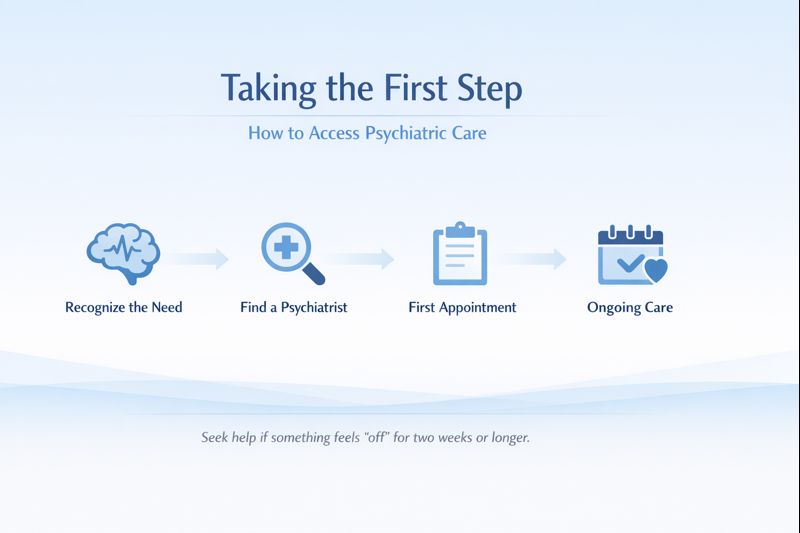
Taking the First Step: How to Access Psychiatric Care

How to access psychiatric care

Step 1: Recognize Your Needs for Psychiatric Care

You should consider a psychiatric evaluation if:

  • Symptoms persist for more than two weeks
  • Daily functioning is significantly impaired
  • You need medication management
  • Previous treatments haven’t worked
  • You have complex or co-occurring conditions
  • Medical conditions complicate your mental health
  • You need specialized treatment

Step 2: Finding a Psychiatrist

  • Your primary care doctor’s referrals
  • Online available psychiatrist directory
  • State psychiatric association directories
  • Hospital-affiliated psychiatric clinics

Step 3: Initial Psychiatric Appointment

What to Bring:

  • Current medication list
  • Medical records (if available)
  • Previous psychiatric treatment records
  • Family psychiatric history
  • List of symptoms and timeline

Step 4: Ongoing Psychiatric Care

Follow-Up Appointments:

  • More frequent initially (every 2 weeks if taking medication)
  • Monthly once stabilized
  • As needed for medication adjustments or new symptoms

Telepsychiatry in Georgia: What Patients Should Know

Telepsychiatry allows patients to receive psychiatric care through secure video visits.

The U.S. Department of Health & Human Services (HHS) confirms that telehealth is a safe and effective way to receive mental health care.

Mental Health Safety & Crisis Support

If you or someone you love experiences thoughts of self-harm, immediate help is critical.

The Crisis Lifeline (988) provides free, confidential support 24/7 across the U.S.
Source: https://988lifeline.org/

📞 Call 988
📞 Call 911 for emergencies

Taking the Next Step

Learning about mental health is a powerful first step. When you’re ready, professional psychiatric care can help bring clarity, balance, and support.

👉 Learn more about psychiatric care services at Windermere Medical Group
👉 Explore condition-specific resources
👉 Ask about telehealth options

FAQs:

Absolutely. Telepsychiatry is now widely available and equally effective for most conditions. Contact our support team to learn more about telehealth services for mental health at Windermere Medical Group.

No. Many people seek care for mild to moderate symptoms that still affect daily life.

Psychiatrists are medical doctors who can prescribe medication and treat complex mental health conditions. Psychologists provide therapy and psychological testing. Therapists (counselors, social workers) provide talk therapy with master’s-level training.

Yes. Evaluation, monitoring, and therapy coordination may be helpful without medication.

Treatment length varies based on individual needs.

No. The course of the medication depends on your condition. Some people need short-term treatment for depression or anxiety. Others with bipolar disorder, schizophrenia, or recurrent depression may require long-term medication.

About the Author

priya-bayyapureddy-md

Priya Bayyapureddy

Dr. Priya Bayyapureddy, MD is a board certified Internal Medicine doctor with over 20 years of experience in primary care Internal Medicine. Dr. Bayyapureddy completed her Internal Medicine residency at Emory University School of Medicine and internship at University of Tennessee College of Medicine at Chattanooga.