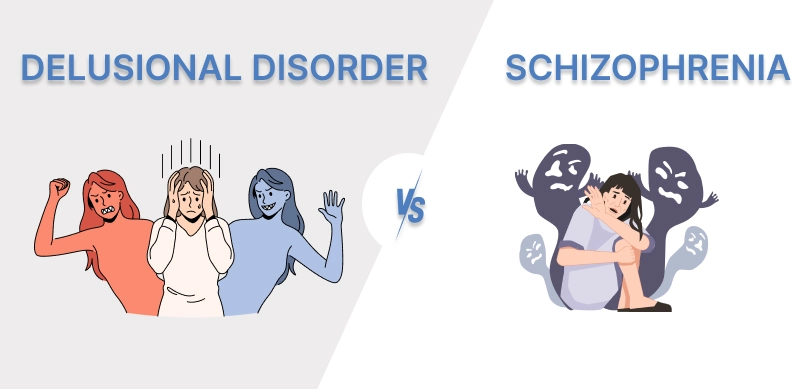
Schizophrenia and delusional disorder are two psychiatric conditions that involve altered thinking and false beliefs. While they may appear similar on the surface—both involve delusions—their symptoms, severity, and impact on daily life differ significantly. Understanding these differences is essential for early diagnosis, effective treatment, and long-term management. This guide explores schizophrenia vs delusional disorder in detail, including symptoms, causes, diagnosis, and treatment options.
What Is Schizophrenia?
Schizophrenia is a severe, chronic mental health disorder that affects how a person thinks, behaves, and perceives reality. It includes a combination of delusions, hallucinations, disorganized speech, and impaired functioning.
Hallucinations (hearing or seeing things that are not present)
Disorganized speech
Disorganized or erratic behavior
Negative symptoms such as reduced emotional expression or lack of motivation
Difficulty functioning socially or occupationally
Schizophrenia typically develops in late adolescence or early adulthood and often requires long-term treatment. To explore treatment options, visitDr. Priya Bayyapureddy orDr. Swachitha Kothapally.
What Is Delusional Disorder?
Delusional disorder is a psychiatric condition characterized primarily by persistent, non-bizarre delusions—beliefs that are false but still plausible, such as being followed or poisoned.
Key Symptoms of Delusional Disorder
Fixed, long-standing delusions
Normal emotional expression and everyday functioning
No hallucinations or minimal hallucinations
Coherent thinking and normal behavior outside delusion
Strong conviction about the delusional belief
People with delusional disorder often appear completely normal when the delusion is not being discussed. For expert evaluation, consultDr. Rani Patil.
Schizophrenia vs Delusional Disorder: Key Differences
In summary, schizophrenia is a multisymptom disorder affecting many areas of life, while delusional disorder involves isolated, persistent delusions.
and convenient Same Day Clinic and Virtual Clinic options. Our providers deliver ongoing medical care for children, adults, and seniors, including preventive visits, annual physical exams, chronic disease management, Medicare-supported visits, psychiatric services, and more.
We are committed to accessible, relationship-based healthcare and are currently accepting new patients across all locations. Looking for a trusted medical provider near you? Schedule your appointment today and experience care designed around your needs, in person or online.
For personalized treatment plans, connect withDr. Dhara Patel.
Treatment for Delusional Disorder
Antipsychotic medication (lower doses often effective)
Psychotherapy to challenge delusional beliefs
Stress management therapy
When to Seek Professional Help
Seek help if you or a loved one experiences symptoms such as strong belief in ideas not based in reality or disorganized thinking
Conclusion
Although schizophrenia and delusional disorder both involve delusions, they differ greatly in symptoms, severity, and daily impact. Recognizing these differences helps individuals seek timely treatment and improve long-term outcomes. Consulting amental health specialist can provide accurate diagnoses and effective treatment plans.
Schizophrenia includes hallucinations and disorganized thinking, while delusional disorder involves only persistent delusions with mostly normal functioning.
You will receive a text from an “882-86″ short phone number inviting you to a video call, when your provider is ready for start your visit. (Please make sure our office has your correct and update phone number, because link will be sent to that phone number.)
Tap on the link in the text message, there is no need for you to download the app.
Tap on the blue ‘Join Visit’ button
In order to join your video call, you must grant your smartphone browser access to your camera and microphone.